A Thought Experiment for Creative Ecosystems
What Can You See?

This photo is a pretty image of the night sky, but it’s difficult to focus on anything of substance. How many stars are there? Can you name any of the stars? What direction are you facing? These stars are a lot like individual pieces of content. There is an almost insurmountable amount of them and aside from some variance in color and brightness, there is little difference between them. Somewhere out there is an absolutely remarkable star (or piece of content) but it’s going to be tough to find it.
What Can You See Now?
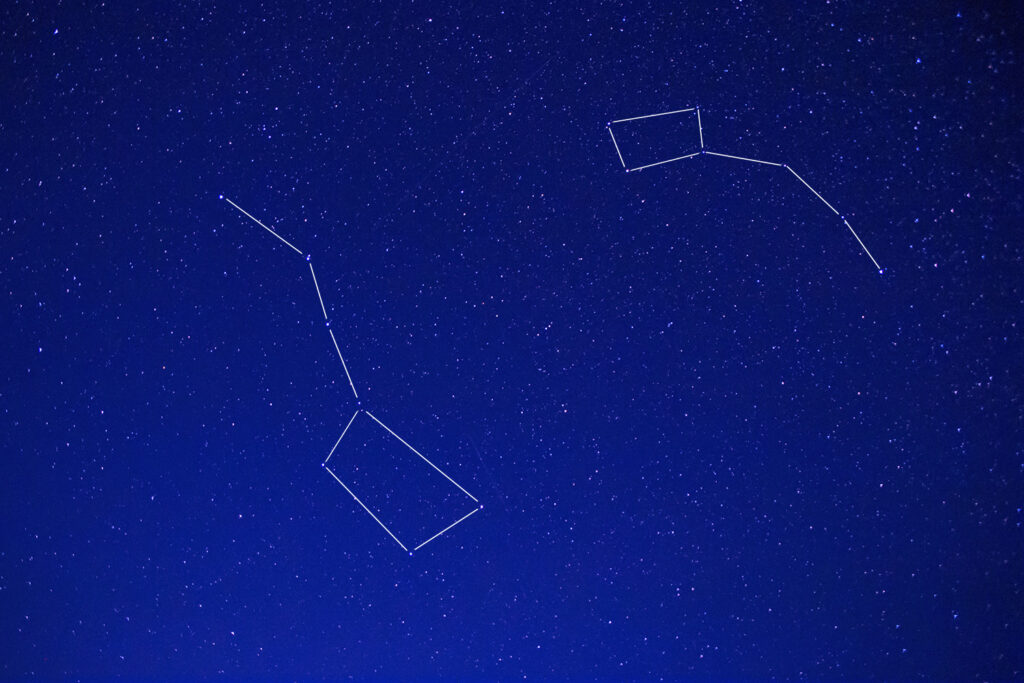
Ancient astronomers mapped patterns in the night sky in the form of constellations. In this image, a series of stars is given meaning; they relate to each other and when connected form shapes we call Ursa Major and Ursa Minor. Chaos is given structure. Thousands of visible stars become the backdrop to just 14 of them. We can gain a sense of place as well. The North Star, or Polaris, is found in the tip of the handle of Ursa Minor, indicating that we’re facing North even though there are no other points of reference in the image.
In terms of content, these connections can be thought of as the start of a creative ecosystem. As a viewer, you’ve been given some guidance. This could be platforms, like Instagram, giving you a stream of similar interests. Or maybe a playlist of DIY videos on YouTube. Or a list of recommended products that other shoppers on Amazon looked at before making a purchase.
How Do We Stand Apart?
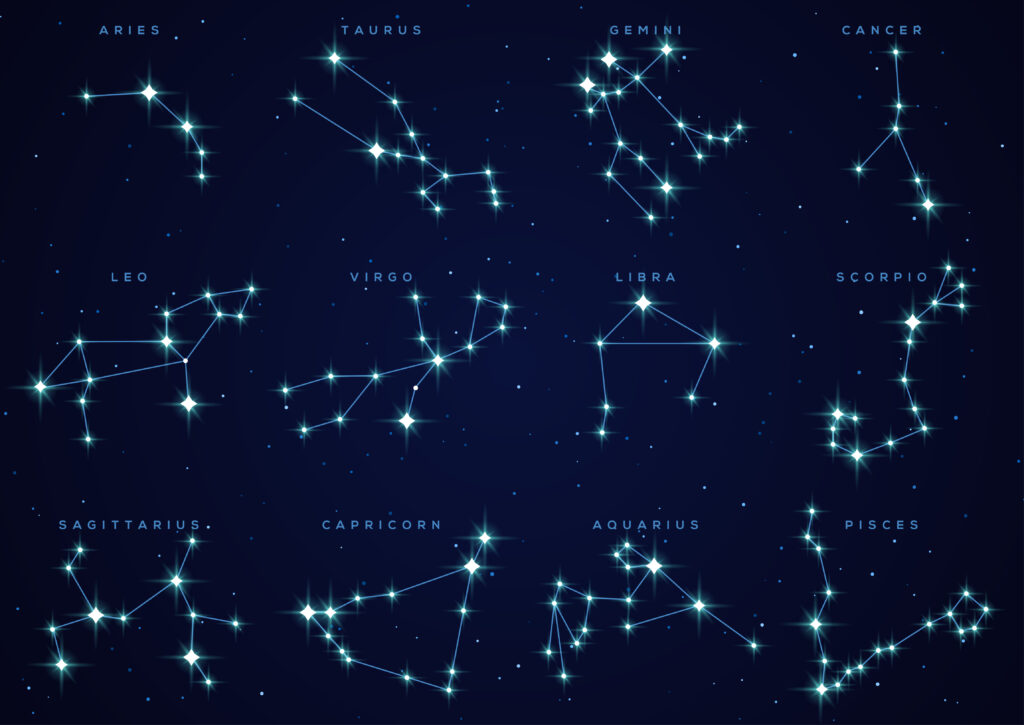
The relationship between stars and the zodiac mirrors the way humans transform raw data into meaningful heritage. While stars exist as independent points of light, constellations act as the sky’s editorial framework, grouping those points into recognizable shapes that provide a navigational and structural logic to the celestial sphere. The zodiac elevates this structure into the realm of identity, assigning specific archetypes and temperaments to the sun’s path throughout the year. By layering ancient mythology and symbolic traits onto these geometric clusters, the zodiac turns “random spots in the sky” into a complex narrative system that people use to interpret their own personalities, motivations, and life paths. By treating the sky as a canvas for storytelling, these systems bridge the gap between cold, astronomical distance and the human desire for a structured sense of self. This is how brands set themselves apart.
Hierarchy of Needs and How to Plan for Creative Ecosystems
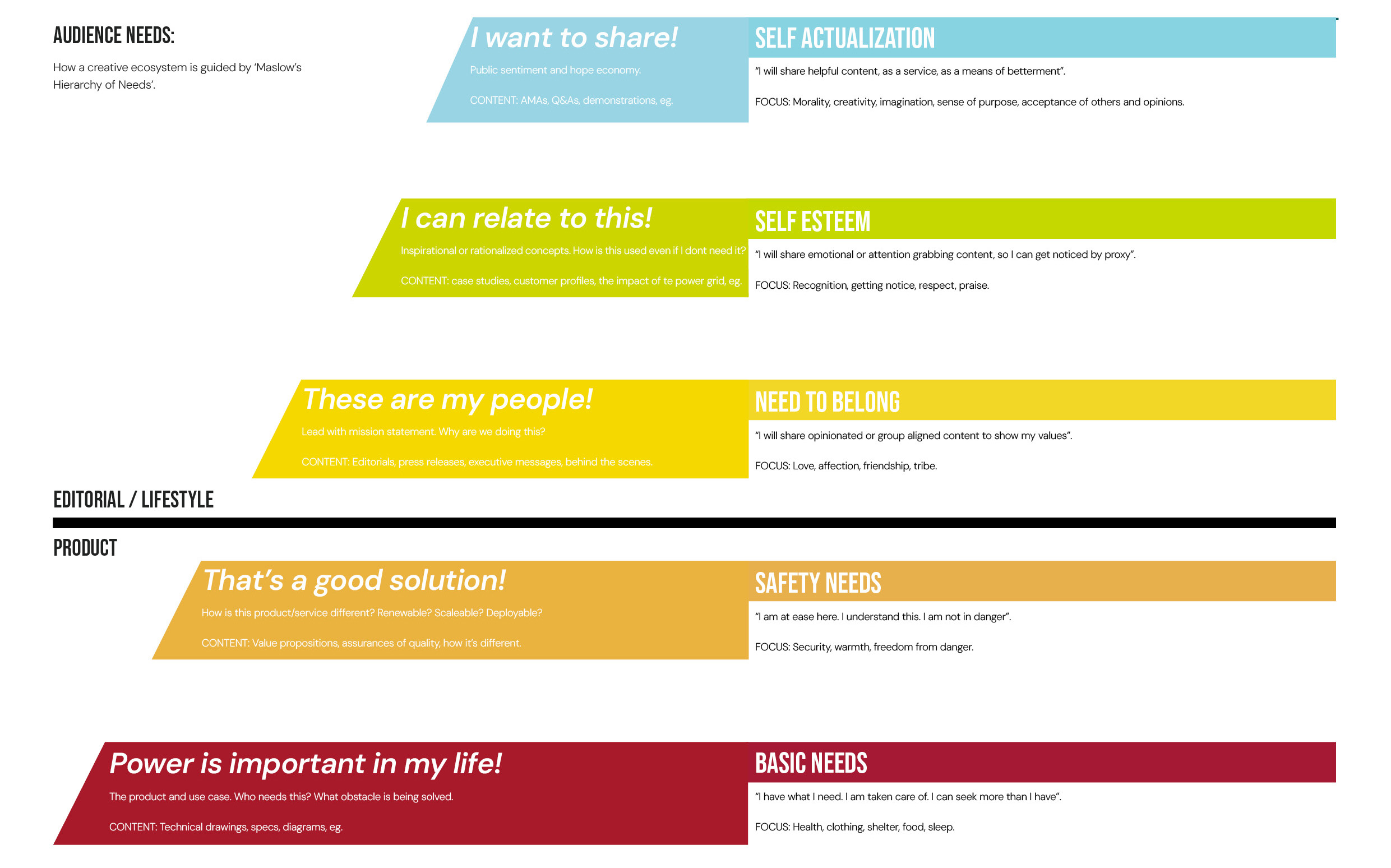
Maslow’s Hierarchy of Needs is a great model for looking at how different content influences different behavior. Here is a brief look at how Endurance Energy could begin to model the brand’s voice and content.